



How to draft emails by talking
Say the whole email out loud first, then clean it up. Your emails come out faster, and they still sound like you.
By Louis Pereira, founder of AudioPen
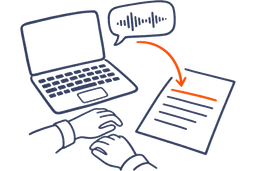
The short answer: say everything the email needs to cover, in any order, for a minute or two. Then let an app like AudioPen turn the recording into a clean email in the tone you pick, paste it into Gmail or Outlook, and edit for thirty seconds. You get the whole thought out first and fix the words second, which is the opposite of how most of us type.
Nadia keeps two styles in AudioPen. One is "casual email." The other is "business memo." She picks which one after she is done talking, not before. The email she thought was going to be a quick reply sometimes turns out to be a five-paragraph explanation of a financial restructuring. She does not know which kind of email it is until she hears herself say it.
That is the thing nobody tells you about drafting emails by voice: it changes what you say.
The real bottleneck is not your typing speed
Here is what happens when most people write an important email. They type a sentence. Read it back. Delete four words. Retype them. Second-guess the tone. Nine minutes later, they have three paragraphs that sound like a LinkedIn post nobody asked for.
The bottleneck is not the keyboard. It is the editing loop. Every sentence gets picked apart before the next one exists, so your full thought never comes out. You are polishing fragments.
Speaking skips the loop. You cannot backspace spoken words, so you say the whole thing, messy and all over the place, and the full shape of your thinking comes out. Then you clean it up. That order of work produces better emails. The version of you who rambles for two minutes hits the real reason around the ninety-second mark. That reason would never have survived the typing and deleting.
Draft an email by voice in five steps
- 1Pick one email you have been putting off.
- 2Open AudioPen and pick a style, such as Casual Email, Formal Email or one you made from your own writing.
- 3Talk for two minutes about what you want to say. Do not perform. Explain it like you would to a friend.
- 4Read the draft, then paste it into Gmail, Outlook or Apple Mail.
- 5Edit for thirty seconds and send it.
The vomit draft
Peter, who ran a company and sat on several boards, called his spoken drafts "verbal vomit." Disgusting. Also perfectly accurate.
His method: open AudioPen, list the three or four points he needed to cover, then talk through them. No outline. AudioPen gave him back a clean, organized version. He pasted it into his email app and tweaked from there.
He was not dictating. Dictation is a performance. Peter was thinking out loud, and AudioPen was catching the output. He used it most for emails where tone mattered. Talking produced a more careful email than typing, because he could hear whether something landed as he said it.
Your voice, your style
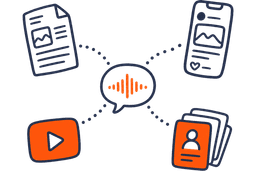
AudioPen turns speech into structured writing. Email is one use. Notes, memos, journal entries, meeting recaps and blog drafts all work the same way. You talk, it structures.
For email, the part that matters most is styles. AudioPen comes with ready-made ones, such as Casual Email, Formal Email and Business Memo. You can also make your own: describe it in a sentence, or paste in a sample of your best writing so the drafts match how you sound on a good day. Every email you draft by voice then sounds like the ones you spent twenty minutes on. Except now it takes two minutes.
This is what Nadia figured out. Each of her two styles captures one version of her voice. The casual one sounds like her. The business one sounds like her. Not like a template. Not like AI. Like Nadia on a good writing day, every time.
Why the mess is the point
The obvious worry: "If I just ramble into a microphone, will my email not be a mess?"
Your recording will be a mess. That is the raw material, not the finished email.
You say "okay so the thing is, we really need to push the deadline because, well actually there are two reasons..." and AudioPen turns it into a clean two-paragraph email with numbered points and a sign-off. You said all of it. You just wrapped it in filler and three false starts. AudioPen unwrapped it.
Plain transcription gives you every "um" and false start. Heavy AI rewriting gives you something that sounds like a robot. AudioPen sits in between: it fixes the grammar, removes the filler, keeps your voice, and writes in the style you choose. You also set how much it edits, from Low to High.
Skip the paste: talk straight into your inbox
Once drafting by voice is a habit, you can drop the copy and paste. With voice typing, you put your cursor in the reply box and talk, and the text lands right there, raw or rewritten.
On a Mac or Windows computer, press and hold the hotkey, talk, and let go. Or double-tap the hotkey, talk, and tap it again, and AudioPen rewrites what you said before it types it in. On iPhone, iPad and Android, use the AudioPen keyboard on iPhone and iPad or the floating bubble on Android, inside the Gmail or Outlook app. The web app and the Chrome extension do not have voice typing, so there you record, then copy the draft.
The part that actually matters
For some people, this is about more than speed.
Henrik, a linguistics professor with ADHD, said it gave him "greater autonomy and peace of mind." Writing emails used to be the most stressful part of his job, not because he did not know what to say, but because typing drained him. He would put off important replies for days. Now he talks them into AudioPen and they are done in minutes. If that sounds like you, here is how people with ADHD use AudioPen.
Robert, a retired pastor in his seventies, writes regularly to a young man who is in prison. The replies he used to type were exhausting and never matched the depth of the letters he received. Now he dictates his answers into AudioPen paragraph by paragraph. The replies are longer, warmer, and more him.
None of these people use AudioPen because it is faster. They use it because it lets them write the messages they were avoiding. Typing was the thing in the way.
Start with the email you are avoiding
Pick one email you have been putting off. Open AudioPen. Talk for two minutes about what you want to say. Read the draft, paste it into Gmail or Outlook, edit for thirty seconds, and send it.
You just wrote the email you avoided for two days in under three minutes. Do it three times and you will realize you were never bad at writing emails. You were bad at typing them.
Names have been changed to protect privacy.